


Helminth infections are a group of diseases caused by parasitic worms. Helminths can settle in the intestines, lungs, gallbladder and bile ducts of humans.Parasites cause mechanical damage to internal organs, and helminth residues lead to intoxication.Helminthiasis is also dangerous for humans because it suppresses the immune system, aggravates the course of other diseases, leads to increased fatigue, reduces the absorption capacity of the intestines, reduces the effectiveness of vaccination, etc.In rare cases, the disease is transmitted through the skin or through the air.
Classification of helminthiasis
By location:
- Intestinal.These include ascariasis, strongyloidiasis, trichuriasis, teniarynchiasis, etc.
- Pulmonary.This group includes tominxosis and paragonimiasis.
- Tissue.This class includes schistosomiasis, trichinosis, toxocariasis and filariasis.
- Hepotobiliary system.This group includes opisthorchiasis, fascioliasis and clonorchiasis.
By stage:
- Spicy.Helminthiasis usually appears 2 to 4 weeks after infection.Depending on the severity of helminthic infestation, signs of helminthiasis are observed from 1 week to several months, then the disease becomes chronic.
- Chronic.The clinical manifestations of chronic helminthiasis depend on the characteristics of the parasite species.In the presence of helminths with reproduction of larvae (filariasis or strongyloidiasis), allergic manifestations persist for a long time.In other forms of the disease, symptoms depend on the number, size and location of the parasites in the body.
Helminthiasis and micronutrient deficiency
Settling in the human body, parasites feed on blood and tissue juices, absorbing nutrients.For growth and reproduction, helminths need, first of all, microelements, which leads to a decrease in their content in the body.The consequence of helminthiasis may be a deficiency of the following microelements:
Zinc deficiency.It causes prostatitis, infertility, dwarfism, parakeratosis (similar to scabies or scabies), various tumors and many other pathologies.
Selenium deficiency.It leads to a decrease in immunity and can provoke the development of malignant tumors of the gastrointestinal tract, mammary glands and prostate.
Iodine deficiency.It causes growth retardation, impaired puberty and underdevelopment of reproductive organs.With a lack of iodine, mental retardation and even dementia are possible.
Manganese deficiency.It can cause brittle bones, weight loss, seizures, dermatitis and degeneration of the genital tract.
Chromium deficiency.It causes fatigue, sugar intolerance (borderline diabetes), growth retardation and increases cholesterol levels.
Signs of helminthiasis
- fever;
- various rashes;
- swelling of the face, conjunctivitis;
- inflammation of the upper respiratory tract;
- loose stools;
- in children, tonsillitis, lymphadenitis;
- bronchospasm, pulmonary infiltrates, pneumonia;
- myocarditis;
- hepatitis;
- meningoencephalitis.
Symptoms (clinical picture) of helminthiasis
Acute helminthiasis.For this form of helminthic infestation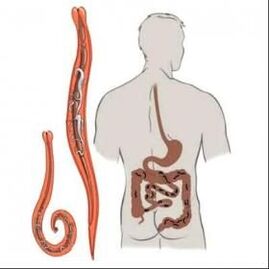 Characteristic signs of general allergic reactions: itchy rash, fever, swollen lymph nodes, muscle and joint pain.Acute helminthiasis often leads to the development of pulmonary syndrome, abdominal pain and dyspeptic disorders.In this case, the liver and spleen increase in size and central nervous system symptoms may appear.
Chronic helminthiasis.In many forms of helminthiasis, parasitism of several individuals occurs without any unpleasant symptoms.Characteristic signs of helminthiasis appear in the presence of large worms (taenids, broad tapeworm, etc.).Symptoms depend on the type and location of the parasite.With intestinal helminthiasis, pain, dyspeptic and asthenoneurotic syndromes are observed.Ascariasis can cause pancreatitis, obstructive jaundice and intestinal obstruction.Enterobiasis is characterized by itching in the anus at night.With clonorchiasis and opisthorchiasis, hepatitis, cholecystocholangitis and various gastrointestinal lesions may occur.
Helminthiasis and infectious diseases
Worm infestations increase the risk of contracting infectious diseases.Helminths reduce immunity and weaken the body as a whole.Thus, parasites allow microbes and viruses free access to body tissues.Helminthiasis can be accompanied by the following infectious diseases.
Toxoplasmosis.This is an infectious disease that affects people and animals.You can become infected with toxoplasmosis through a contaminated blood transfusion, eating dishes made from thermally unprocessed meat or fish, or through contact with a patient's feces.Toxoplasmosis is transmitted from mother to child during intrauterine development.The infection can cause fetal death or miscarriage.There is a high risk of mortality among newborns infected with toxoplasmosis.
Chlamydia.An infectious disease that occurs in rodents, cats and humans.It can be accompanied by fever, rhinitis, conjunctivitis and pneumonia.Affects the organs of vision, reproductive and respiratory systems.Chlamydia is transmitted by airborne droplets, contact and sexual contact.
Toxocara.The disease is observed in humans, domestic animals and rodents.Toxocara eggs remain viable for months in dry feces.The infection can be contracted through contact with animal hair or through the soil.The disease is accompanied by severe forms of allergies and pathologies of internal organs.
Diagnosis and therapy of helminthiasis
How to identify helminthiasis
Helminthiasis prevention consists mainly of observing strict hygiene standards.It is unacceptable to drink raw water and eat poorly processed or unfamiliar foods (fish, meat).Timely identification of people infected with parasites also plays an important role in prevention.The diagnosis of helminthiasis is made by identifying helminth larvae and eggs.Most often they are located in various parts of the gastrointestinal tract, so the most common method is stool analysis.
In some cases, standard methods for diagnosing helminthiasis are ineffective.For example, some parasites do not lay eggs for a long period of time and therefore cannot be detected in feces.The innovative method makes it possible to detect the presence of helminths and assess the general condition of the body through the iris of the eyes.The method is based on the fact that each organ has a projection on a certain segment of the “iris”, where it transmits information about its condition through the visceral centers of the brain.This diagnosis of helminth infections makes it possible to detect parasites even in cases where the conventional test for helminth eggs is negative.

How to get rid of helminthiasis
An effective, safe and proven means of getting rid of helminth infestation and replenishing the body with essential microelements is a complex of medicines for helminths, which allows you to improve your health in several main areas at once:
- increase immunity;
- normalize metabolism;
- improve the enzymatic functions of the stomach, pancreas and intestines;
- alleviate signs of allergies;
- normalize the activity of the gastrointestinal tract, etc.
Antiparasitic health program
To eliminate helminthiasis, it is necessary to take broad-spectrum antiparasitic drugs for 3 months.Between each month of use you must take a 7-day break.